Growing Together: Ages 2–11—Unlocking Every Child’s Potential
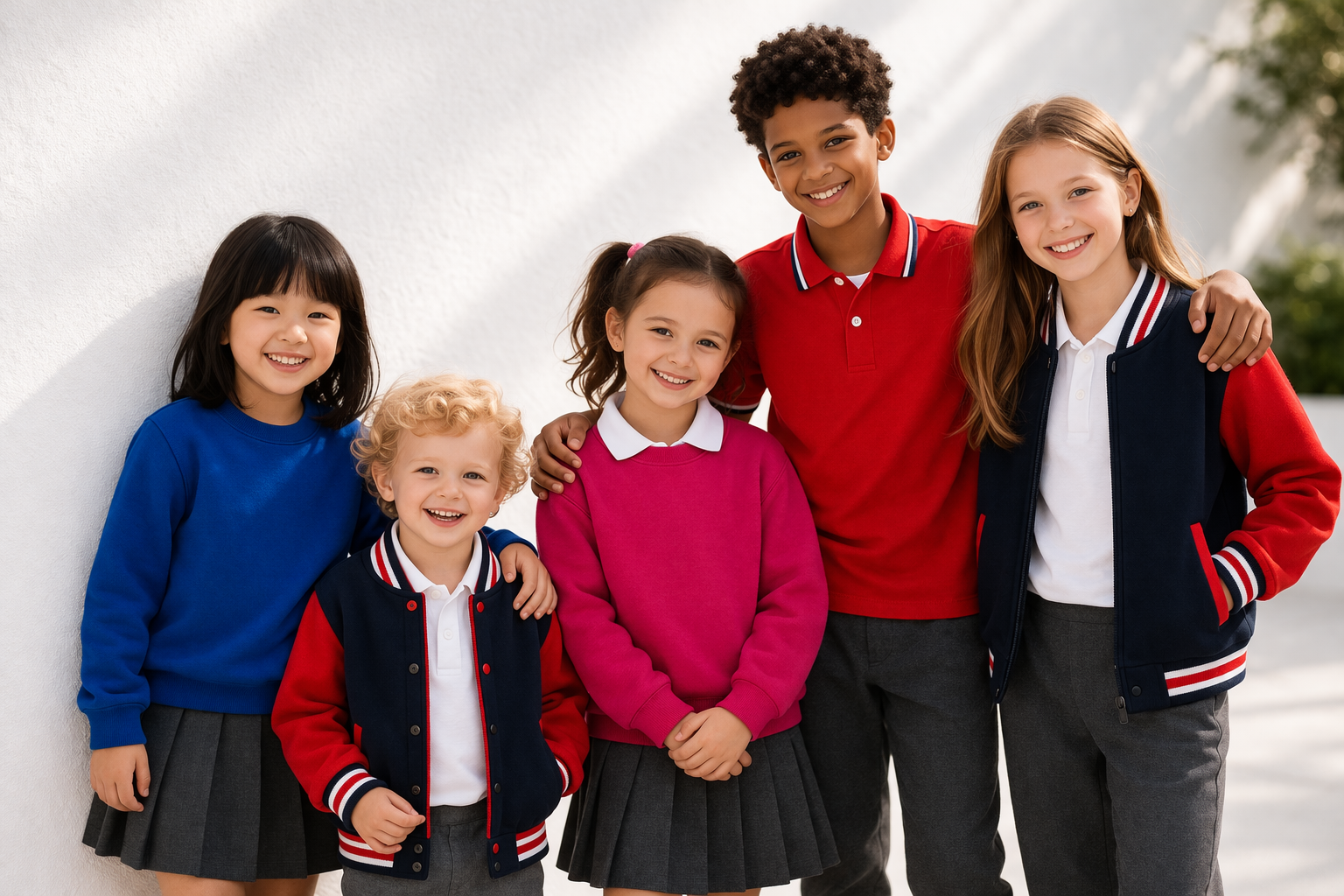
Growing together. Learning differently. Unlocking every child’s potential, ages 2 to 11.
Growing up together from ages 2 to 11 seems like an almost obvious idea… and yet, it is still not very widespread. Most education systems have chosen to organize children by age, which helps structure learning, provide clear benchmarks, and establish a shared progression. But this approach, as coherent as it may be, does not always reflect the full diversity of learning paces and profiles observed among children.
Because a child’s development isn’t linear. They move forward in leaps and bounds, with pauses and unexpected bursts of progress. Some start speaking very early but take longer to learn to read. Others observe for a long time before taking the plunge. Some quickly show marked academic potential, while others reveal more creative, relational, or strategic intelligences. In a strictly homogeneous setting, these differences can sometimes take a back seat. In an environment where ages are mixed, they become a source of richness.
Growing together means allowing every child to find their place without being constantly compared to others. The youngest children observe, imitate, and imagine their own futures. They see what is possible, in concrete terms, right before their eyes. The older children, for their part, explain, guide, and organize their thoughts. And within this dynamic, each child’s unique qualities emerge. The academically inclined child refines their rigor. The creative child takes more risks. The reserved child gradually gains confidence. The quick-witted child learns to delve deeper.
This approach fosters a much more authentic form of excellence—one that is not based on competition, but on helping each child reach their full potential. We don’t try to force all children into the same high-achieving mold. Instead, we identify what makes them unique… and help them go further, each in their own way.
In this environment, learning undergoes a profound transformation. Adults are no longer the sole source of knowledge. Children learn from one another constantly, without even realizing it. A glance, an explanation, an imitation… everything becomes an opportunity. And above all, children develop a deeper understanding of other types of intelligence. They learn that intelligence is not limited to a single form.
But what is even more striking are the invisible skills that are developed. In a mixed-age group, a child learns to adapt to different paces, to cooperate with a variety of personalities, and to adjust their approach depending on the situation. They come to understand that they can take turns being both a learner and a mentor. This flexibility—this ability to navigate between different roles—is a rare skill… and an extremely valuable one.
It’s also an environment that’s much closer to real life. In a family, at work, or in society, we never find ourselves surrounded solely by people of the same age or background. We interact with people who have different strengths and diverse backgrounds. Preparing children for this gives them a real head start. They learn to collaborate effectively, to recognize others’ talents, and to build with them rather than against them.
In practice, this creates spaces where everyone learns at their own pace, while being challenged to reach their full potential. One child might be hands-on, another reading, a third explaining, and a fourth exploring a more complex concept in greater depth. Groups form naturally based on needs and skill levels. And within this diversity, everyone finds opportunities to grow.
It’s more demanding, of course. It requires more finesse, more attention, and more ambition as well. Because supporting a diverse range of students, uncovering their unique potential, and setting standards tailored to each individual—these things can’t be improvised. But that’s also what makes it possible to aim for lasting, meaningful success—and, above all, success that’s in tune with who these children truly are.
"Growing Together: Ages 2–11" is not meant to be in opposition to any existing model. It is another way to enrich the educational experience, taking into account the true diversity of children and using that diversity as a catalyst for excellence.
And in a world that increasingly values diverse talents, this is probably one of the greatest gifts we can give them.
27 rue Jean Rostand
91400 ORSAY
+33 (0) 1 59 04 11 94
contact@314internationalschool.fr