Flexible classrooms and traditional classrooms: supporting today’s children
Flexible classrooms, personalized learning plans, student engagement… what if schools were truly evolving to adapt to today’s children?
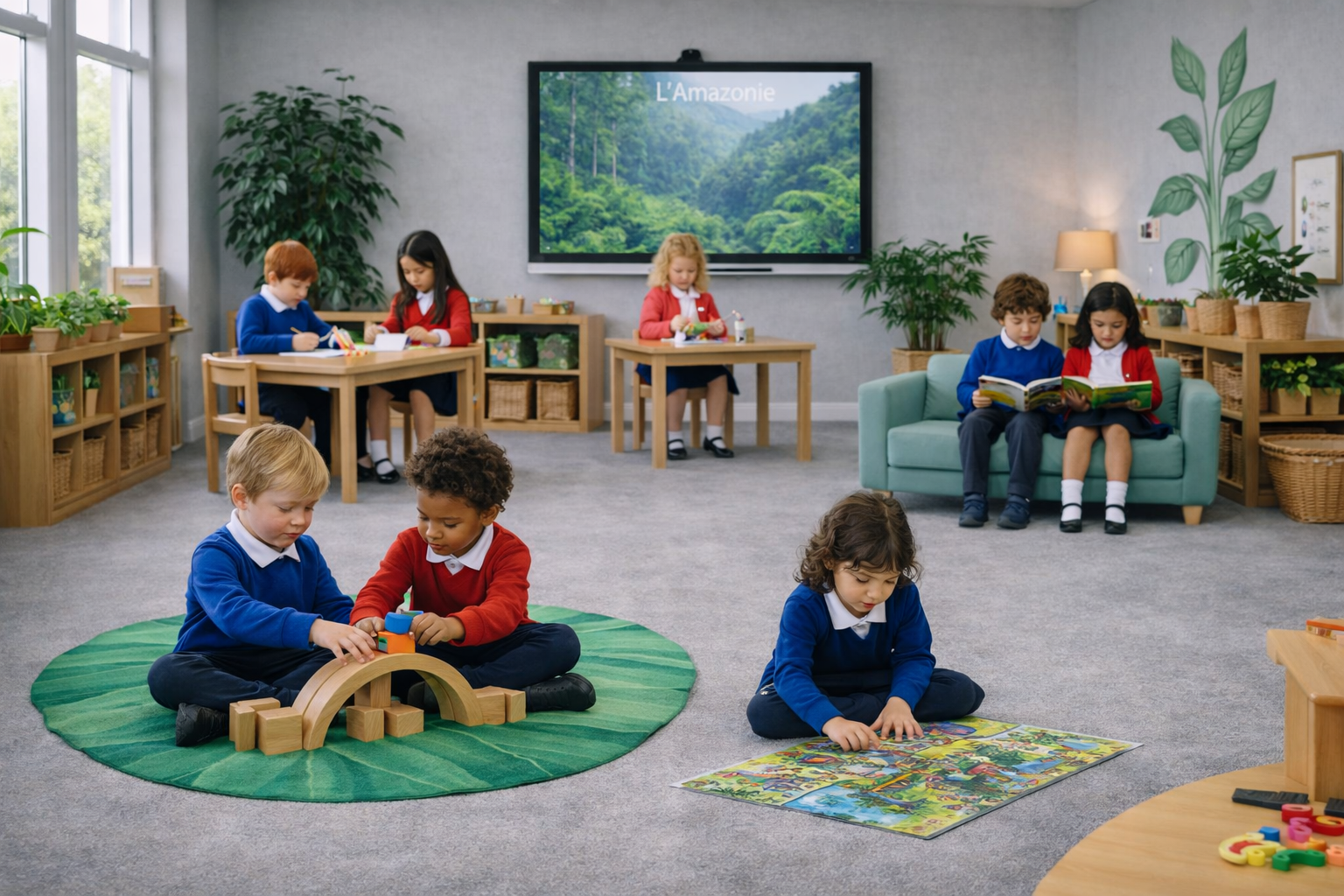
For a long time, schools were built around a clear, structured, and reassuring model: a teacher facing a group of students, attentive students seated at their desks, and a stable environment designed to convey knowledge in an organized manner. This model has enabled generations to learn, grow, and develop, and it remains a solid foundation for thinking about education today.
But today’s children are growing up in a profoundly different world—one that is faster-paced, more visual, and more interactive, where information is constantly accessible and where attention works differently. They develop the ability to adapt, a natural curiosity, and a need to understand through hands-on experience. In this context, schools are also evolving to better respond to these new learning dynamics, and it is in this light that the flexible classroom truly comes into its own.
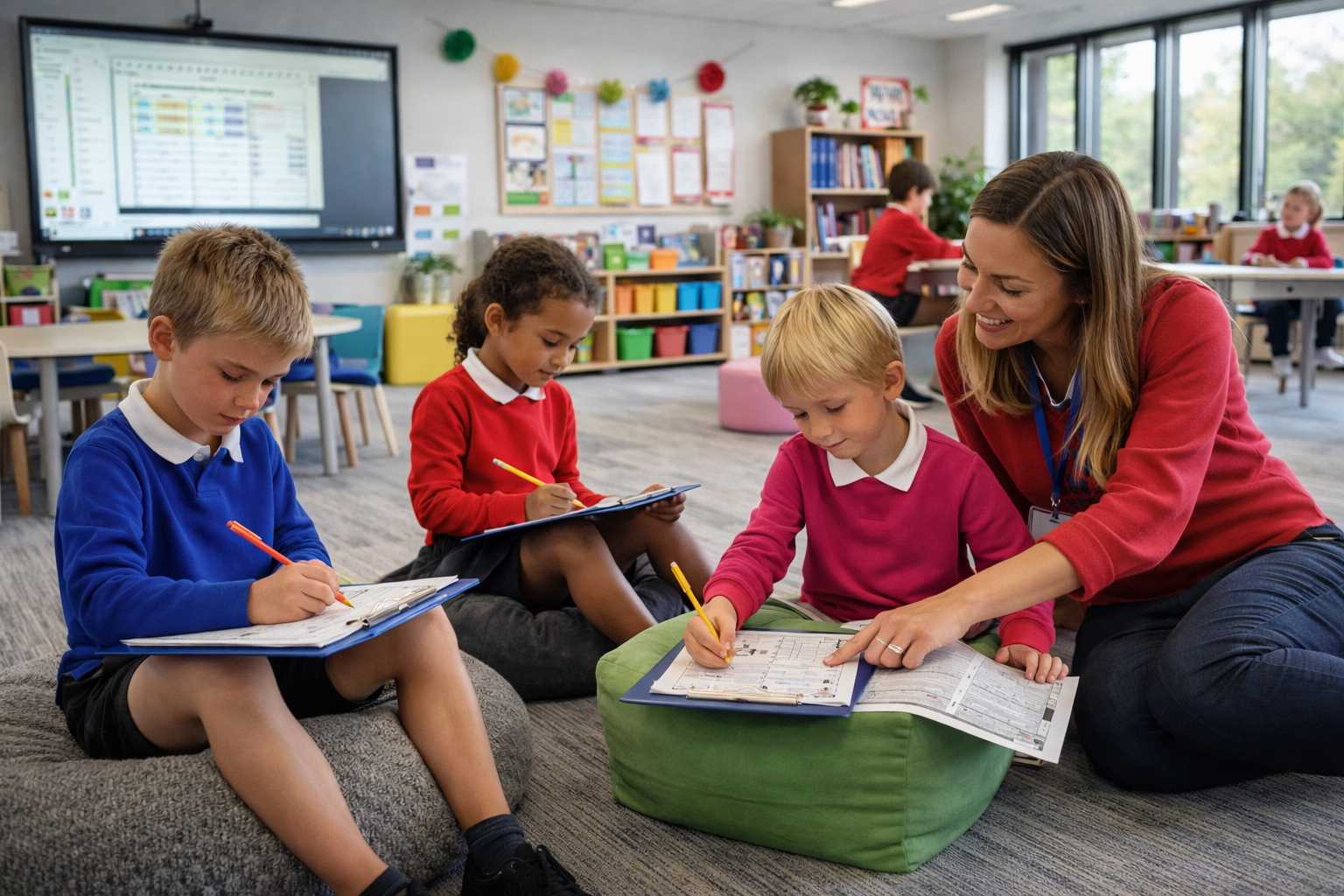
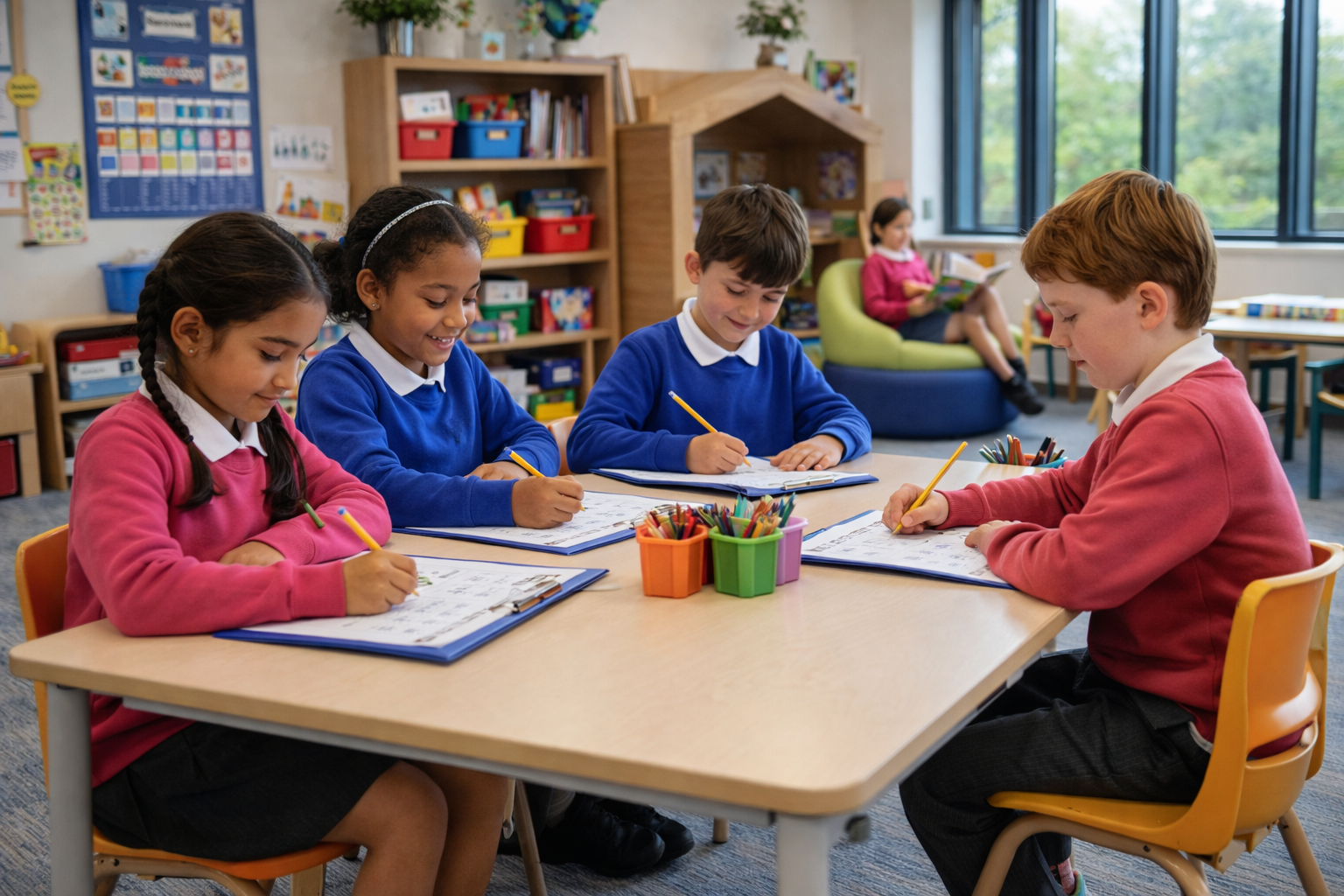
It is often associated with spatial design, featuring a variety of seating options, distinct work areas, and greater freedom of movement. That is true, but it is only the tip of the iceberg. The flexible classroom is, above all, a different way of thinking about learning itself. In this environment, students do not simply follow a collective pace; they also progress according to an individualized learning plan, designed to adapt to their level, needs, and progress. In practical terms, this means that within the same classroom, students can work on different skills at different paces while pursuing common goals.
This approach profoundly transforms the classroom dynamic. Students are no longer simply following a curriculum; they are embarking on their own learning journey. They know what they need to do, why they are doing it, and how they are progressing. They learn to organize themselves, set priorities, and persevere. The teacher, for their part, can observe more closely, intervene in a more targeted manner, and provide precise support to each student. They no longer address only a group but each individual, based on their needs, which allows for real and continuous differentiation.
Contrary to popular belief, this approach is based on a highly structured framework. The objectives are clear, expectations are explicit, and the rules are clearly defined. The lesson plan provides direction, and the teacher ensures consistency. The freedom granted to students is never left to chance; rather, it is embedded within a rigorous framework that provides security and guidance.
It is precisely this balance between structure and autonomy that makes the flexible classroom particularly relevant today. It allows every child to truly progress, without being held back or left behind. Students can delve deeper when they’re ready, or reinforce their understanding when they need to, all while staying engaged in their learning. Beyond academic knowledge, they develop essential skills such as independence, time management, decision-making, and accountability for their work.
The flexible classroom is therefore not limited to a different spatial layout. It offers a more tailored, engaging, and effective learning experience that is in tune with the needs of today’s children. It is part of a natural evolution of the school system, with a clear goal: to enable every student to make progress, get involved, and fully develop their potential.
And while it is winning over more and more families, it’s not just a passing fad—it’s because it’s based on a simple truth: children learn best when they are actively involved in their own learning.
27 rue Jean Rostand
91400 ORSAY
+33 (0) 1 59 04 11 94
contact@314internationalschool.fr